Sponsored by |
 |
|
WELCOME TO |
|
|
Estimated Read Time: 4 - 5 minutes |
|
|
| |
| |
Today’s Docket |
News Stories:
Anthropic Closes $65 Billion Series H — The Largest Private Financing in History 🔗 TechStartups Fonoa Raises $110M Series C and Acquires PwC's Tax Platform to Become Global Tax Infrastructure 🔗 TechStartups Startup Insight:
Startup Idea:
Social Spotlight:
Resources:
|
|
|
|
| |
|
What if 8 weeks changes how you seal every deal? |
|
|
Join the next cohort of Wharton Online + Wall Street Prep’s 8-week Private Equity Certificate Program: |
Learn the exact curriculum used to train analysts at KKR, Blackstone, and Carlyle. Earn a certificate from Wharton Online. (Your LinkedIn will thank you.) Build a global network of 5,000+ finance professionals across PE, IB, and credit.
|
Program starts June 8. Code SAVE300 saves $300 on tuition. |
Learn More |
| |
| |
Latest News from the World of Business |
(1) Anthropic Closes $65 Billion Series H — The Largest Private Financing in History Anthropic closed a $65 billion Series H led by Altimeter Capital, Dragoneer, Greenoaks, Sequoia Capital, Capital Group, Coatue, D1 Capital Partners, GIC, ICONIQ, and XN, with strategic participation from Micron, Samsung, and SK hynix. The round brings Anthropic's lifetime capital raised to at least $95 billion since February 2026's Series G and cements its position as the most valuable private AI company in the world. The financing reflects sustained enterprise and government demand for Claude across regulated industries where Anthropic's safety-first positioning and public benefit corporation structure have produced institutional trust that financial metrics alone do not fully capture. 🔗 TechStartups (2) Fonoa Raises $110M Series C and Acquires PwC's Tax Platform to Become Global Tax Infrastructure Fonoa — which automates indirect tax determination, calculation, and compliance for global enterprises — closed a $110 million Series C while simultaneously acquiring PwC's Indirect Tax Edge platform, pairing fresh capital with a strategic asset that brings an established enterprise customer base and deep institutional credibility into the Fonoa stack. The company is executing a classic operating-layer play: becoming the system of record for a complex, regulated, high-stakes function rather than one of many tools competing for the same budget line. The ability to close a financing and an acquisition simultaneously reflects exactly the kind of clean corporate infrastructure that complex transactions require. 🔗 TechStartups
|
|
|
|
| |
|
| |
| |
Anthropic's $65 billion Series H — closed May 28 and led by Altimeter, Dragoneer, Sequoia, and a long list of institutional and strategic backers — is the largest private financing in history by a significant margin. The mechanics of a round that size require a corporate structure, equity architecture, and governance framework that can absorb that capital without generating legal chaos. Those structures were set when Anthropic was founded, not when the round was being negotiated. The founders who built Anthropic spent significant time and legal expense on corporate design at day one. That investment, invisible to the outside world, is load-bearing in every subsequent financing, governance decision, and investor relationship the company has. |
Fonoa's $110 million Series C — paired with the acquisition of PwC's Indirect Tax Edge platform — tells a parallel story about what happens when structural setup is done correctly at scale: the company can execute a complex strategic acquisition alongside a financing round without the transaction collapsing under contractual or structural ambiguity. The ability to close that deal cleanly depends on clean IP ownership, clear equity records, well-documented contracts, and entity architecture that can absorb an acquisition target without triggering unintended tax or governance consequences. None of that is created during the transaction. All of it is inherited from decisions made years earlier, when the company was far smaller and the stakes felt much lower. |
|
|
|
| |
|
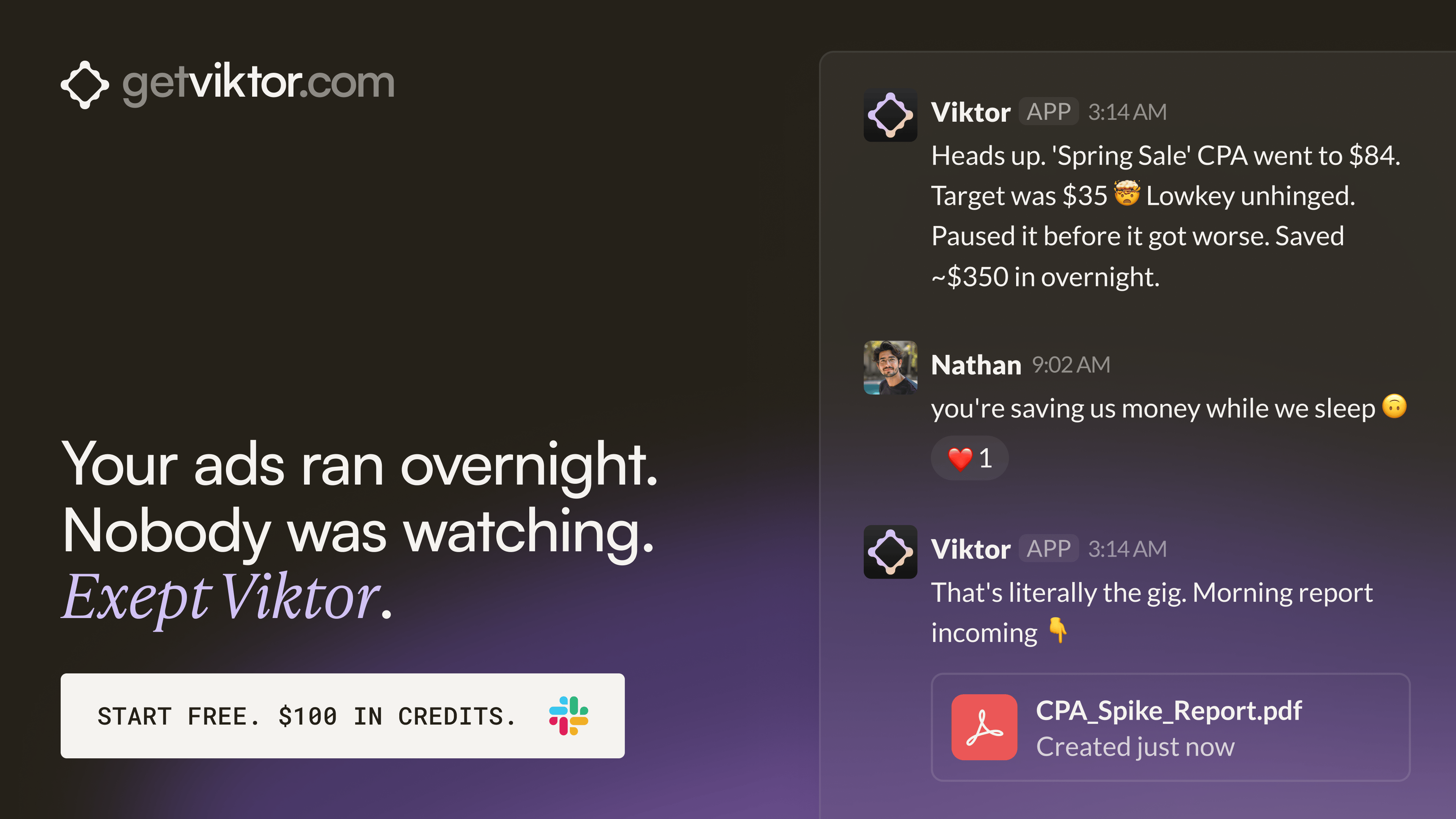
Your ads ran overnight. Nobody was watching. Except Viktor. |
|
|
One brand built 30+ landing pages through Viktor without a single developer. |
Each page mapped to a specific ad group. All deployed within hours. Viktor wrote the code and shipped every one from a Slack message. |
That same team has Viktor monitoring ad accounts across the portfolio and posting performance briefs before the day starts. One colleague. Always on. Across every account. |
Start free. $100 in credits → |
| |
| |
Most first-time founders treat business setup as an administrative task to be completed as quickly and cheaply as possible before the real work begins. That framing is precisely backwards. The structural decisions made in the first weeks of a company's existence determine who owns what, how future equity gets allocated, how intellectual property is protected, and how cleanly the company can raise capital, hire employees, and eventually exit. Getting them wrong creates legal debt that compounds with every subsequent employee hired, every investor added, and every customer contract signed. Getting them right creates a foundation that supports the company's growth rather than constraining it. |
Entity choice: why Delaware C-Corp is not optional for venture-backed startups |
The first structural decision is entity type, and for any startup intending to raise venture capital, the answer is a Delaware C-Corporation. Not an LLC, not an S-Corp, not a corporation in your home state. The reasons are not arbitrary. Delaware has the most developed body of corporate case law in the United States, which gives investors, lawyers, and courts a predictable framework for interpreting shareholder rights, fiduciary duties, and governance disputes. Most venture investors have documents, processes, and legal precedents built around Delaware C-Corps, and the friction of deviating from that standard — in legal fees, negotiation time, and investor hesitation — consistently exceeds any perceived benefit of an alternative structure. |
LLCs are the most common structural mistake made by early-stage founders who incorporate without legal counsel. LLCs are excellent vehicles for certain business types — service businesses, real estate holdings, tax pass-through structures. They are structurally incompatible with stock option plans, venture financing, and most acquisition structures. Converting from an LLC to a C-Corp is possible but expensive, time-consuming, and sometimes triggers unexpected tax consequences. Founding as a Delaware C-Corp from day one costs essentially the same amount and eliminates a category of problems entirely. |
Equity structure: the decisions that cannot be undone cheaply |
The equity structure established at founding — how shares are allocated between founders, what vesting schedule applies, what the capitalization table looks like before any external capital arrives — is the single most consequential set of decisions in the company's early life. It is also the one most frequently made informally, incompletely, or without independent legal advice for each founder. |
Every founder's shares should be subject to a four-year vesting schedule with a one-year cliff, documented in a restricted stock purchase agreement signed at incorporation. This is not a trust issue. It is a structural protection for every stakeholder in the company, including the founders themselves. A founder who departs in month ten with fully vested shares takes a significant ownership stake out of the company with none of the continued contribution that stake was meant to represent. A four-year vest with a one-year cliff converts that scenario into a clean departure with no equity — which is correct for the company, fair in its logic, and understood by every sophisticated investor as the baseline expectation for a well-structured founding team. |
The initial share count matters too, and most founders get it wrong in ways that create mechanical friction later. Incorporating with 10 million shares of common stock at a par value of $0.0001 per share is the standard. Incorporating with 1,000 shares at $1.00 par value creates a cap table that is difficult to work with when issuing options, convertible notes, or preferred stock — and fixing it requires a stock split that is administratively annoying and occasionally triggers questions from investors who notice the cleaning-up that had to happen. |
IP assignment: the mistake that kills acquisitions and raises |
Intellectual property assignment is the most frequently overlooked structural requirement at founding and the one that most consistently surfaces as a problem during due diligence. Every founder must sign an Invention Assignment Agreement transferring ownership of all relevant intellectual property — code written, designs created, systems architected — from the individual to the company. This sounds obvious. It is routinely not done, or done incompletely, or done with carve-outs that create ambiguity about what the company actually owns. |
The problem surfaces during acquisition due diligence, Series A financing, or any moment when a sophisticated buyer or investor reviews the company's IP ownership chain. A company that cannot demonstrate clean, unambiguous ownership of its core technology cannot close an acquisition and will struggle to close a financing. Fixing a broken IP chain after the fact requires locating founders who may have departed, negotiating assignment agreements under conditions of leverage that did not exist at founding, and sometimes paying for IP that the company should have owned from day one at no cost. Signing a comprehensive IP assignment agreement at incorporation costs nothing and eliminates this category of risk entirely. |
Banking, contracts, and the operational infrastructure that most founders defer |
A dedicated business bank account — separate from any founder's personal finances — is a legal and operational requirement, not a preference. Commingling personal and business funds pierces the corporate veil that limited liability protection depends on. It also creates an accounting nightmare at tax time and makes the financial records that investors and acquirers need to review essentially impossible to produce cleanly. Opening a business bank account costs nothing and takes less than an hour. Not having one creates liability that follows the founder personally, not just the company. |
Every material relationship — with co-founders, early employees, contractors, vendors, and customers — should be documented in a written agreement before work begins. Verbal agreements are enforceable in some contexts, but they are expensive to enforce and impossible to review during due diligence. The categories that matter most are: offer letters and at-will employment agreements for every employee; contractor agreements with IP assignment clauses for every consultant or freelancer who touches the product; mutual NDAs for any material commercial conversation; and customer contracts that specify payment terms, IP ownership of custom work, and data handling obligations. None of this requires expensive custom legal work. Standard templates from Stripe Atlas, Y Combinator's open-source documents, or a one-time engagement with a startup lawyer produce agreements that are fit for purpose and create a clean record for every future transaction. |
The 83(b) election: the tax decision with a 30-day window |
Founders who receive restricted stock subject to a vesting schedule must file an 83(b) election with the IRS within 30 days of the grant. This election allows the founder to pay ordinary income tax on the value of the shares at the time of grant — typically pennies per share at founding — rather than at the time of vesting, when the shares may be worth significantly more. Missing the 30-day window means paying income tax on the appreciated value of shares as they vest over four years, which can create a substantial and entirely avoidable tax liability at exactly the moments when the company is raising capital and the founder's paper wealth is increasing fastest. The 83(b) election is a one-page form. The cost of missing it is measured in hundreds of thousands of dollars at meaningful company valuations. It is the single highest-return administrative action available to a founder in the first month of company formation. |
Business setup is not the most interesting part of founding a company. It is not where the vision lives, where the product gets built, or where the customers are won. But it is the part that determines whether the company the founder is building actually belongs to them — structurally, legally, and financially — when the moment arrives where that ownership is worth defending. Anthropic's $65 billion raise happened inside a corporate structure built correctly at the beginning. Every company that reaches that point does so on a foundation that was laid when nobody was paying attention to it. |
|
|
|
| |
|
|
|
| |
| |
|
Keeping track of worker safety and compliance in construction sites can be a significant challenge for companies, as manual monitoring systems are prone to errors and delays. Implementing a digital platform that uses sensors, wearable technology, and AI to monitor workers' safety in real-time, providing alerts for potential hazards, and ensuring compliance with safety protocols, can greatly enhance workplace safety efforts. This innovative solution could revolutionize the construction industry by significantly reducing the number of accidents and injuries on job sites. |
|
|
|
| |
|
|
|
| |
| |
Was this Newsletter Helpful? |
|
|
Put Your Brand in Front of 15,000+ Entrepreneurs, Operators & Investors. |
Sponsor our newsletter and reach decision-makers who matter. Contact us at hello@stratup.ai |
Image by Freepik |
Disclaimer: The startup ideas shared in this forum are non-rigorously curated and offered for general consideration and discussion only. Individuals utilizing these concepts are encouraged to exercise independent judgment and undertake due diligence per legal and regulatory requirements. It is recommended to consult with legal, financial, and other relevant professionals before proceeding with any business ventures or decisions. |
Sponsored content in this newsletter contains investment opportunity brought to you by our partner ad network. Even though our due-diligence revealed no concerns to us to promote it, we are in no way recommending the investment opportunity to anyone. We are not responsible for any financial losses or damages that may result from the use of the information provided in this newsletter. Readers are solely responsible for their own investment decisions and any consequences that may arise from those decisions. To the fullest extent permitted by law, we shall not be liable for any direct, indirect, incidental, special, or consequential damages, including but not limited to lost profits, lost data, or other intangible losses, arising out of or in connection with the use of the information provided in this newsletter. |
|
|
|
| |
|
|




Comments
Post a Comment